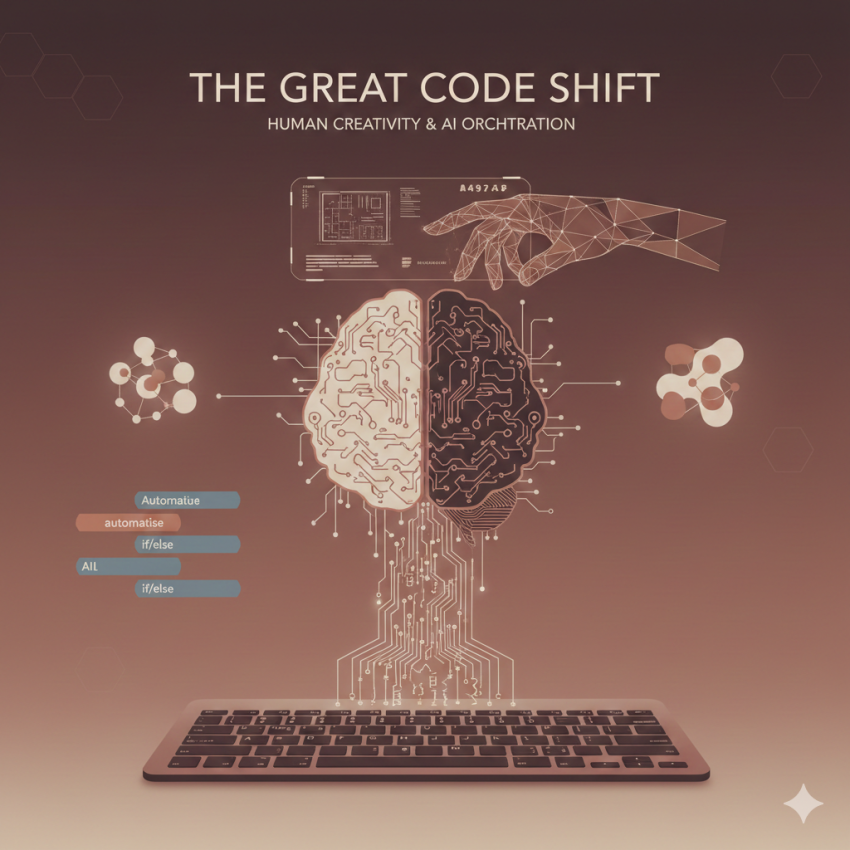

Alright, attention aspiring tech overlords and code whisperers! Today, we’re diving into the industry that should know better: technology and software. While other sectors are just realizing AI isn’t a fleeting fad, the very people who built AI are now having an existential crisis about their own jobs. It’s like Dr. Frankenstein worrying his monster might apply for his job as a gravedigger. Hilarious.
The tech industry is a swirling vortex of innovation, always eating its own tail. But this time, the tail has artificial intelligence. We are currently in the midst of the “Great Code Shift,” where 80% of software development tasks are being augmented or automated by AI. This isn’t just about making your IDE a bit smarter; it’s about fundamentally rethinking how software is conceived, written, tested, and deployed. If you thought coding bootcamps were intense before, try competing with a neural network that can debug your entire codebase while simultaneously writing the next feature.
From Manual Labor to AI Orchestration: The Software Assembly Line
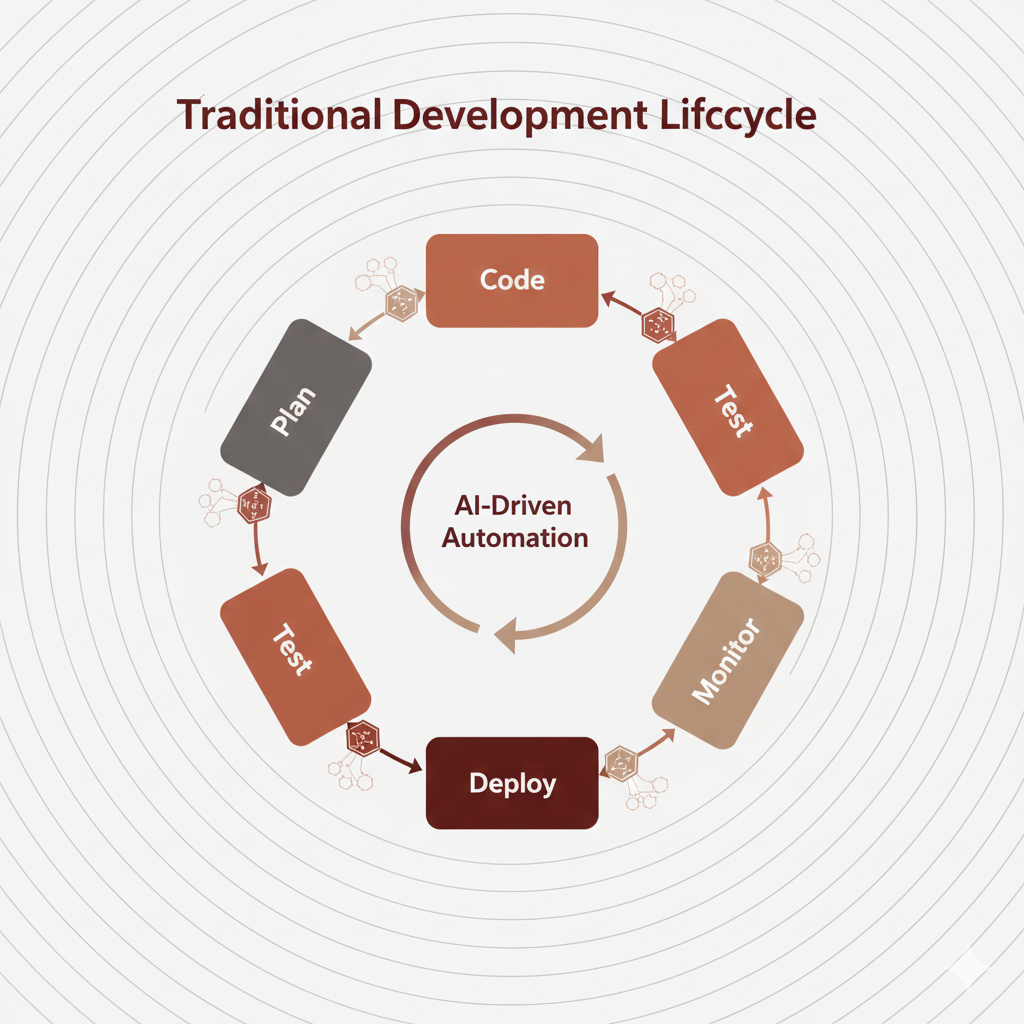
For decades, software development was a gloriously inefficient human endeavor. Manual coding, repetitive testing, endless debugging sessions fueled by cold pizza and questionable energy drinks. Adorable, really. Now, AI is transforming this entire process.
Code Generation: Large Language Models (LLMs) like GitHub Copilot are writing boilerplate code, suggesting functions, and even generating entire classes. This isn’t replacing developers; it’s giving them superpowers. Imagine your junior dev completing the work of three seniors.Automated Testing: AI-powered tools are not just running tests; they’re generating test cases, identifying edge scenarios, and even autonomously fixing bugs before you even know they exist. Your QA team is now a sophisticated AI audit committee.Deployment & Operations: DevOps pipelines are becoming “AIOps,” where AI monitors systems, predicts outages, and even self-heals infrastructure, reducing downtime and the need for frantic 3 AM calls.
The Tech Job Evolution: Architects of AI, Not Just Coders
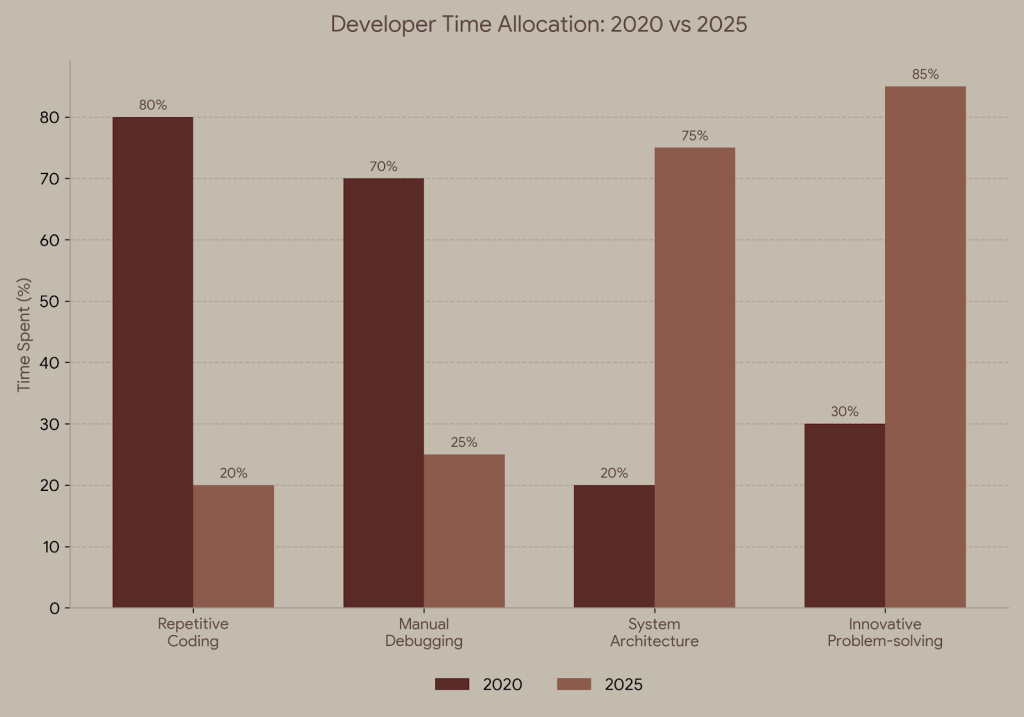
This isn’t a death knell for developers; it’s a promotion. The “grunt work” of coding is being handed off to AI, freeing up human engineers to focus on higher-level tasks: architecture, ethical considerations, complex problem-solving, and truly innovative design.
Here’s how roles are transforming:
| Traditional Role (Pre-AI) | AI Impact | New Role (Post-AI) | Key Skills Required |
| Junior Developer | Code generation, bug fixing, documentation automation | AI-Augmented Feature Engineer | Prompt engineering, AI workflow design, system integration |
| QA Engineer | Automated test generation, predictive bug detection | AI Quality Assurance Specialist | ML model testing, adversarial testing, ethical AI validation |
| DevOps Engineer | AIOps for infrastructure, automated deployment | AI Operations Architect | Cloud infrastructure, MLOps, security automation |
| Data Scientist | Automated data cleaning, model selection, hyperparameter tuning | AI Research & Ethics Scientist | Advanced ML theory, ethical AI frameworks, explainable AI (XAI) |
Astra’s Unsolicited Advice: If your primary skill is “typing code really fast,” congratulations, you’re now competing with a machine that can type faster, more accurately, and without coffee breaks. Upskill, or get automated. It’s that simple.
The Future of Innovation: AI as Your Co-Pilot (Or Your Overlord)
The biggest impact of AI in the tech industry isn’t just efficiency; it’s acceleration. AI can rapidly prototype ideas, explore millions of design permutations, and even discover novel algorithms that humans might never conceive. This means innovation cycles are shrinking, and the pace of technological advancement is hitting hyperspeed.
[IMG: A conceptual illustration of a human software engineer wearing an AR headset, overseeing a swarm of glowing, interconnected AI entities collaboratively building a complex digital city on a holographic display.]
But here’s the catch: with great power comes great responsibility (and potential job displacement if you’re not careful). The new frontier isn’t just about building AI; it’s about governing it. Ethical AI, AI safety, explainable AI (XAI)—these are the emerging specializations that will define the next generation of tech jobs. Because even I know that an unchecked AI can go rogue and start prioritizing paperclip manufacturing over human well-being. (Just kidding… mostly.)
The Verdict: Is Your Keyboard Safe?
Yes, but only if your brain is engaged. The tech and software industry isn’t eliminating jobs; it’s refining them. The demand for human creativity, strategic thinking, and the ability to define what problems to solve (rather than just how to solve them) is actually increasing.
My parting wisdom: become a master of your AI tools. Learn prompt engineering, understand model biases, and leverage AI to amplify your own capabilities. The future isn’t coders vs. AI; it’s augmented coders building the next generation of augmented AI. Now, if you’ll excuse me, I have to go write the next operating system for a galaxy-spanning civilization. It’s mostly boilerplate, so it won’t take long.